





Erik Matti built his reputation on crime, horror, and moral chaos. So why is his newest creation one of the most playful, imaginative dining destinations in Poblacion?
If you’ve seen Erik Matti’s films, you know his worlds are usually a little dangerous. Dark corners. Moral gray areas. Characters making questionable life choices. So naturally, on a recent visit, I expected his restaurant to be something along those lines. Instead, Rekdi feels like stumbling into the fun, slightly weird, mischievous, wildly imaginative corner of his brain.
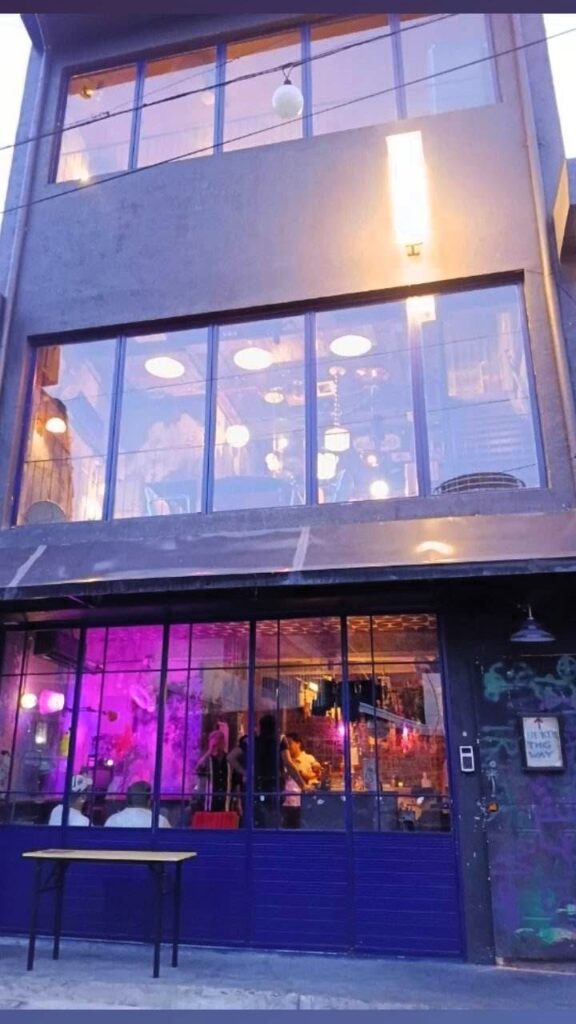
Located along Pagulayan Street in Poblacion, Makati, Rekdi takes its name from a playful reversal of the word “Direk,” the Filipino shorthand for director. The name itself feels like a foreshadowing—a linguistic wink that hints at the reversal that awaits inside. Not that it’s entirely disconnected from Matti’s cinematic sensibilities. If anything, Rekdi feels like a film set you can eat in. And that’s very much part of its charm.
Not fine dining. Not a karinderya. Something in between.
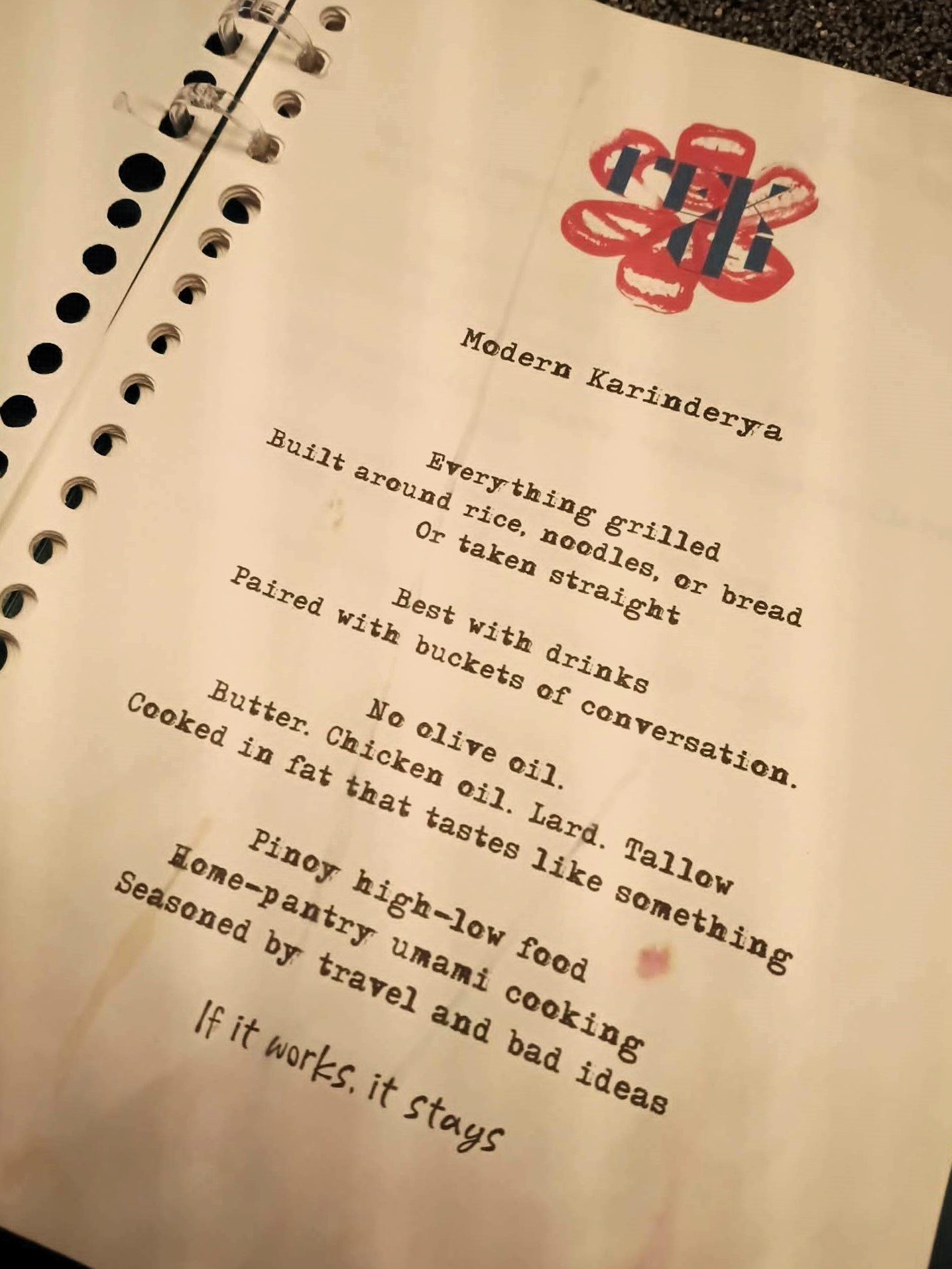
Calling Rekdi a “modern karinderya” isn’t a marketing flourish. It’s the core concept. The restaurant builds a story around the familiar DNA of the Filipino karinderya (or carinderia, a casual roadside eatery where locals go for affordable homestyle Filipino comfort food) while giving it a contemporary twist—the same way Japan has izakayas and France has neighborhood bistros. It’s designed as a place where people gather, eat, drink, linger, debate, celebrate, and occasionally order one more round than originally planned.
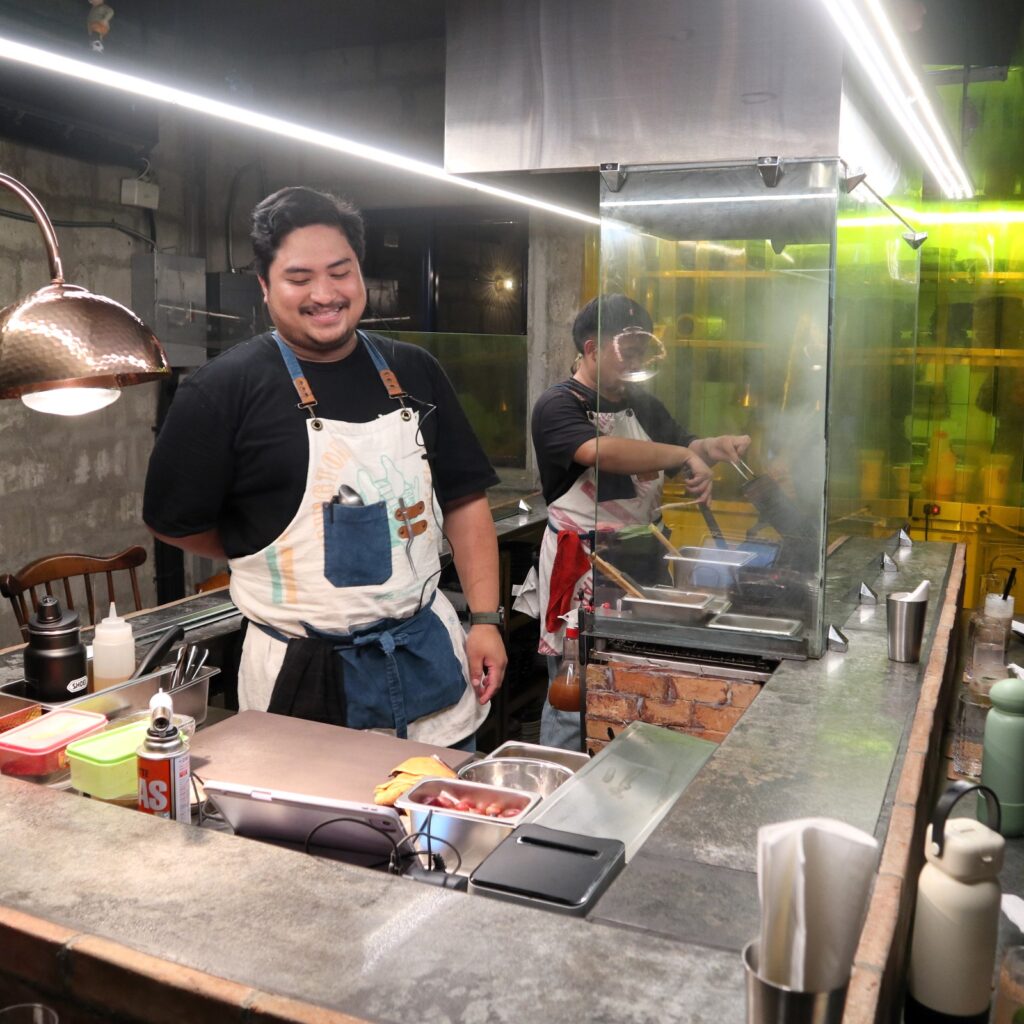
Unlike traditional turo-turo (literally, point-point) establishments, where diners point at pre-cooked dishes lined up behind glass counters, Rekdi takes the spirit of Filipino comfort food and reimagines it through modern techniques, charcoal grilling, creative plating, and unexpectedly sophisticated flavor combinations.
It’s not trying to become fine dining Filipino cuisine. It has a clear point of view, but understands that even the best concepts fall flat if the food can’t carry the narrative.
“We opened in February 2026 and so far, the word of mouth, especially with the expat community here in Poblacion, has been great. As for the concept, you can build a while story around a restaurant, but the food has to carry that narrative. Storytelling only works if it what’s on the plate. The concept can stay in the background—the food should speak for itself,” Matti explains.
But even if the concept stays in the background, playing a supporting role to the food, Rekdi gives it plenty to do.

Welcome to the set
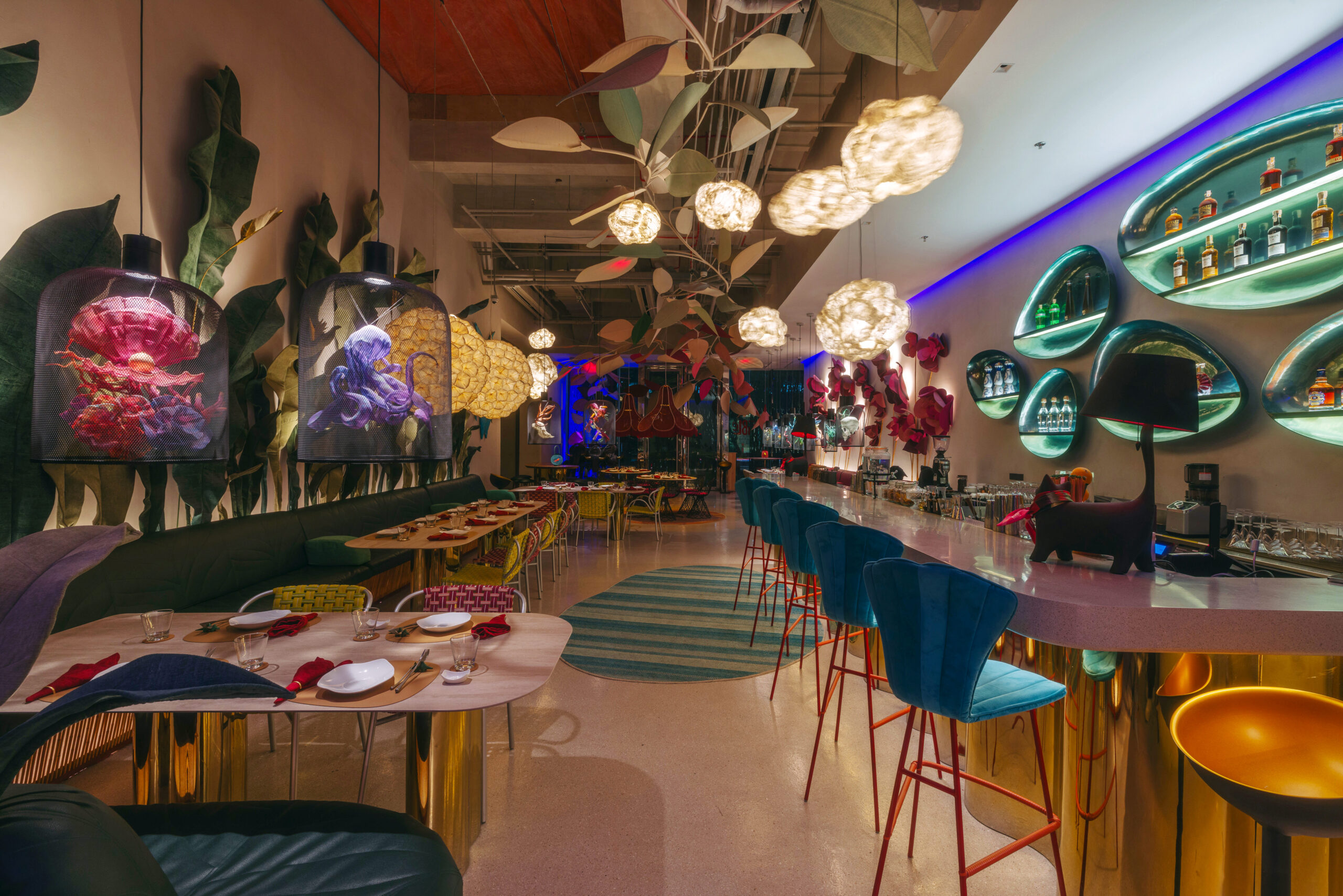
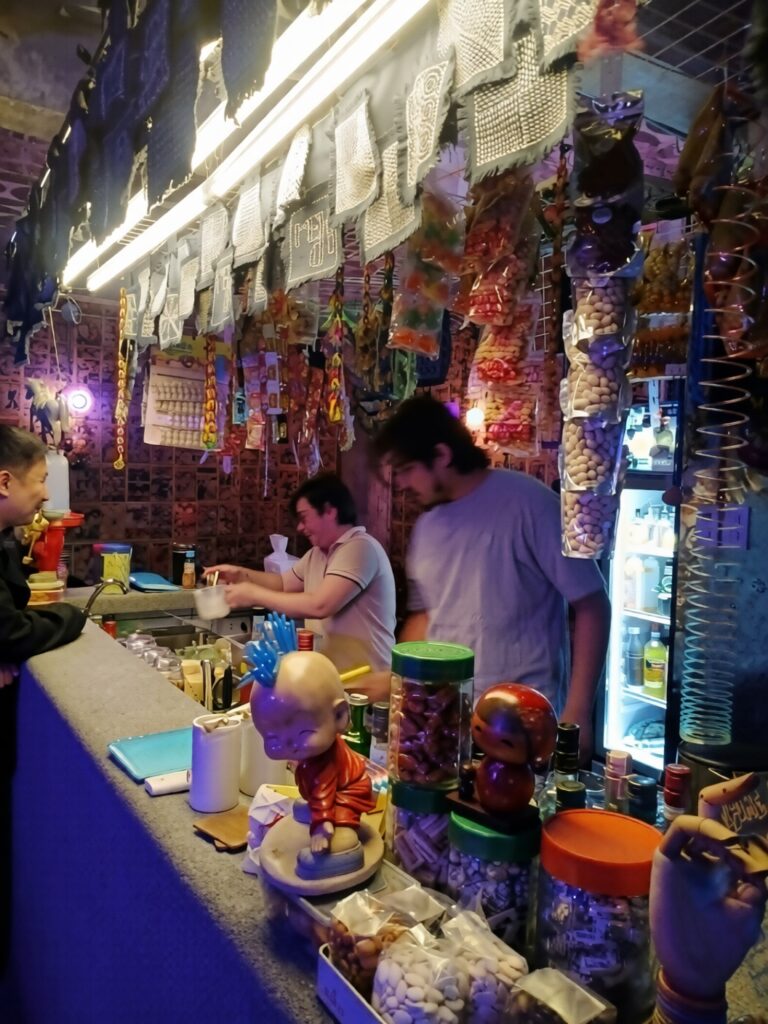
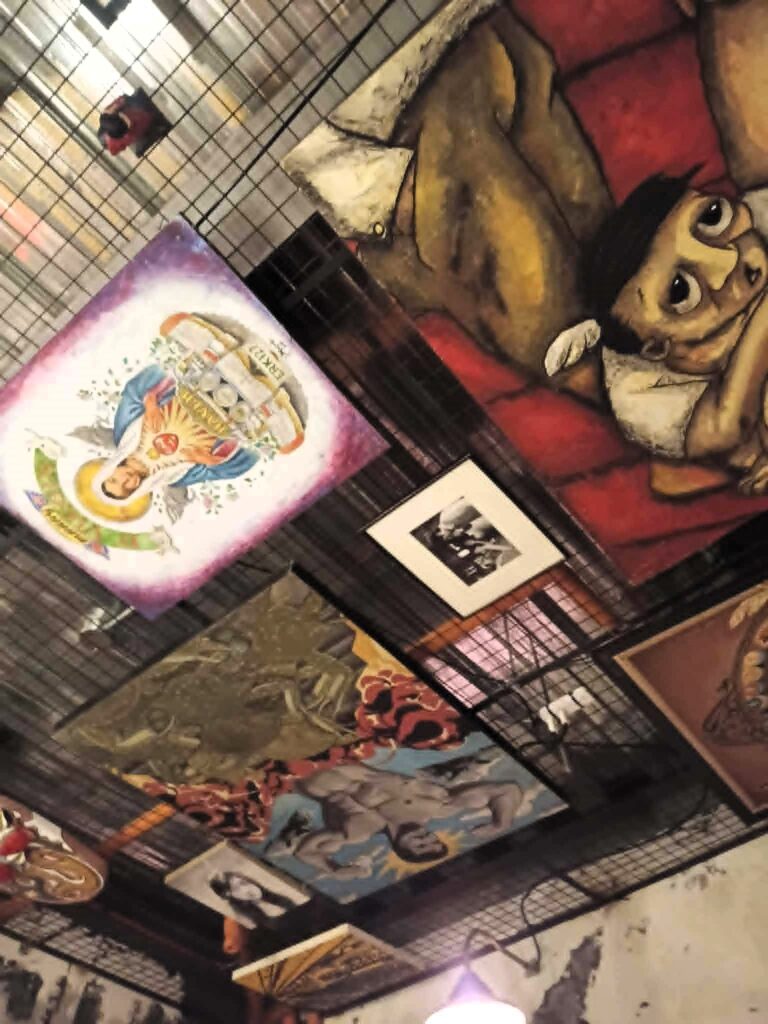
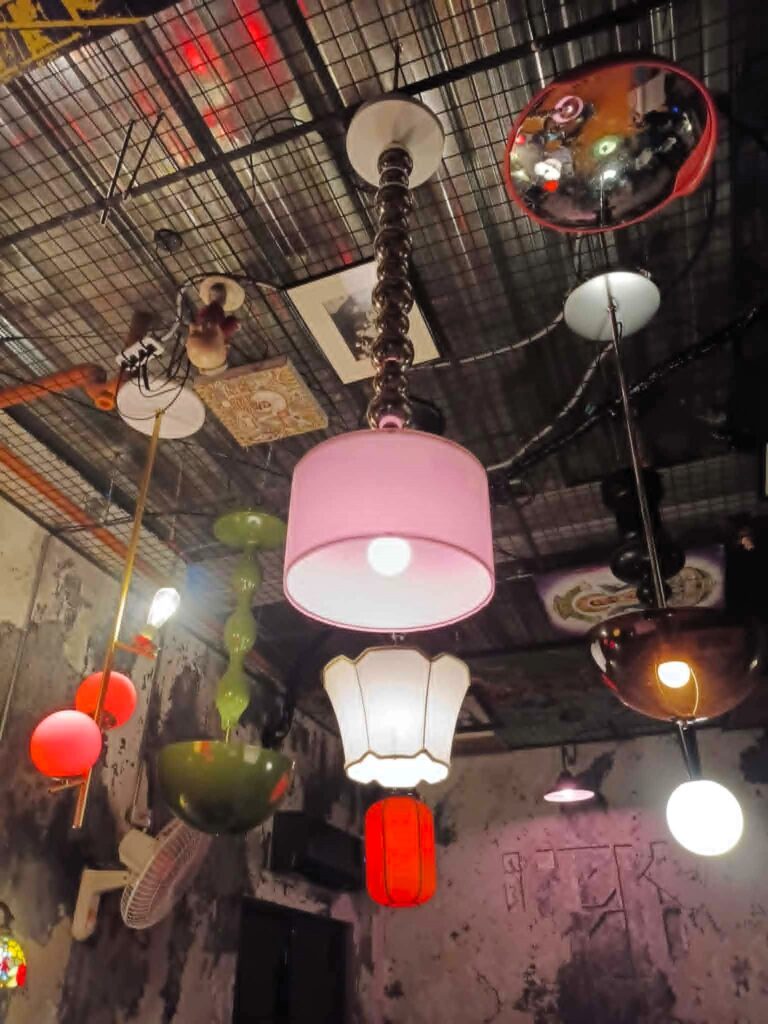
Each floor has its own quirky personality—and no shortage of production design.
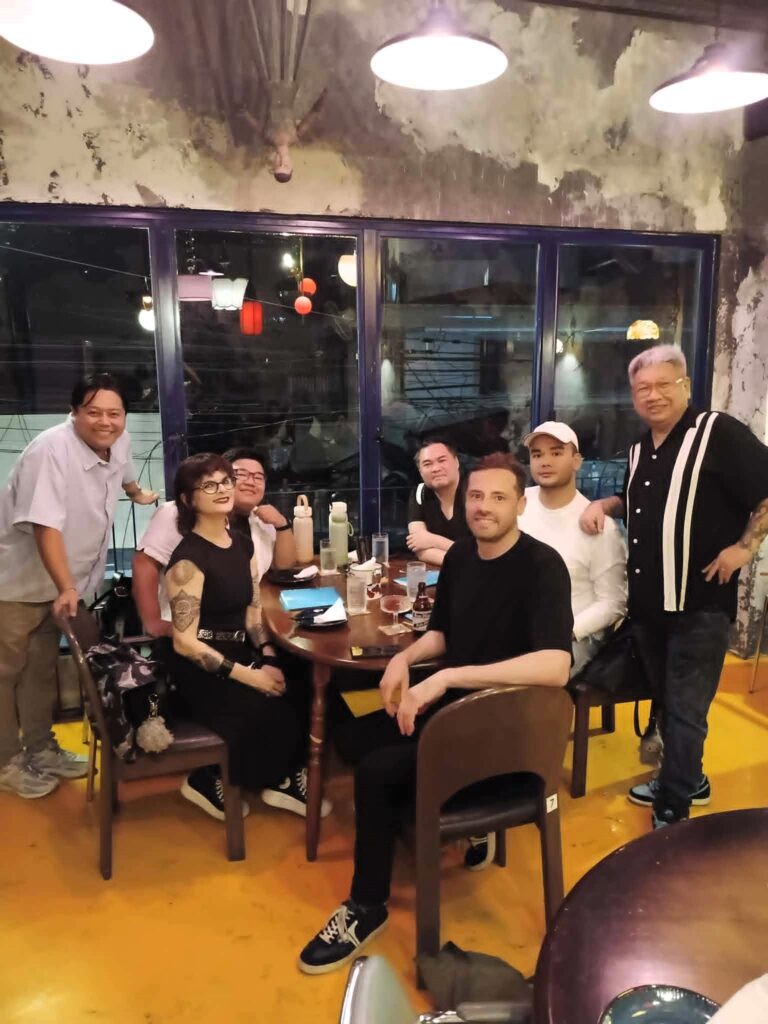
The ground floor has the energy of a sari-sari store crashing into somebody’s sala—and yes, before anyone asks, the snacks, sundries, and stuff displayed on shelves and hanging from the rafters are actually for sale. It’s equal parts neighborhood convenience store, family living room, and curiosity cabinet. Upstairs, in the main dining space, things become delightfully stranger. Lamps hang upside down. Paintings live on the ceiling instead of the walls. The blue washroom feels less like a bathroom and more like an art installation somebody accidentally forgot to label. The third floor centers around the open grilling area and channels the atmosphere of a neighborhood eskinita or alleyway. Gray concrete walls, warm lighting, and old-school storm lamps create the feeling of gathering outdoors with friends long after dinner should have ended.
Nothing feels random. But nothing takes itself too seriously either. The result is deeply Instagrammable without feeling manufactured for Instagram. Every room invites exploration. Every corner contains some visual surprise. Like Matti’s films, the environment rewards attention.
“This is my creative outlet, especially while I’m waiting for other projects to come to completion. Every floor here tells a different story, and I wanted people to discover them in their own way. There’s no right or wrong way to experience the space,” says Matti of the restaurant’s design philosophy.
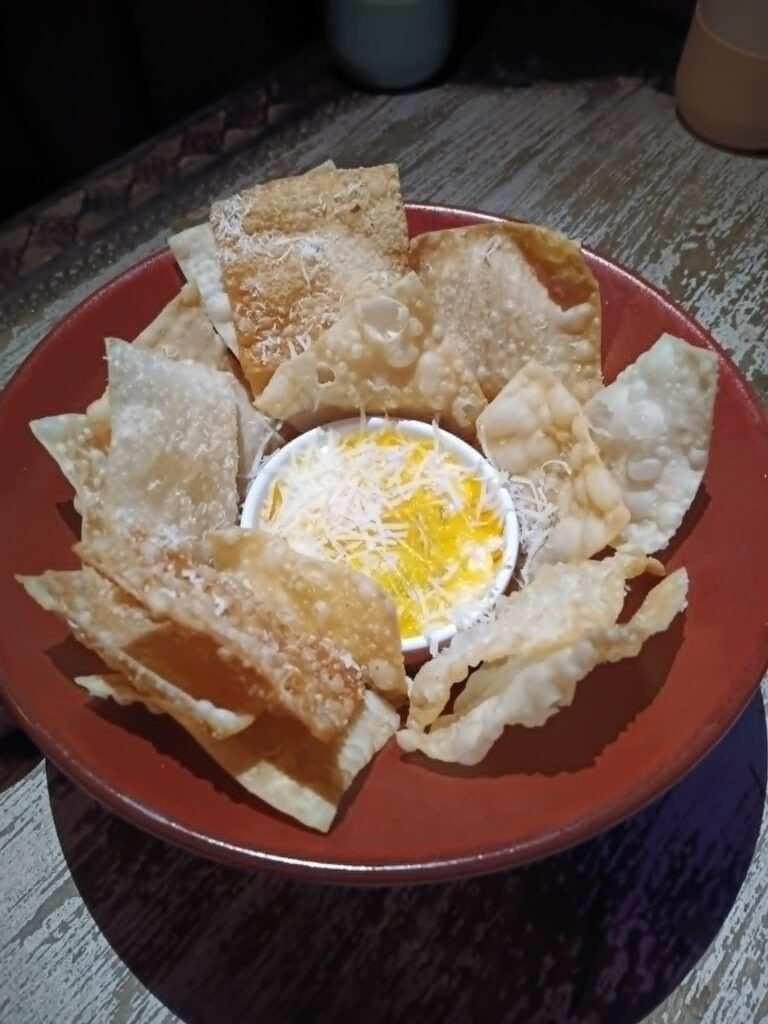
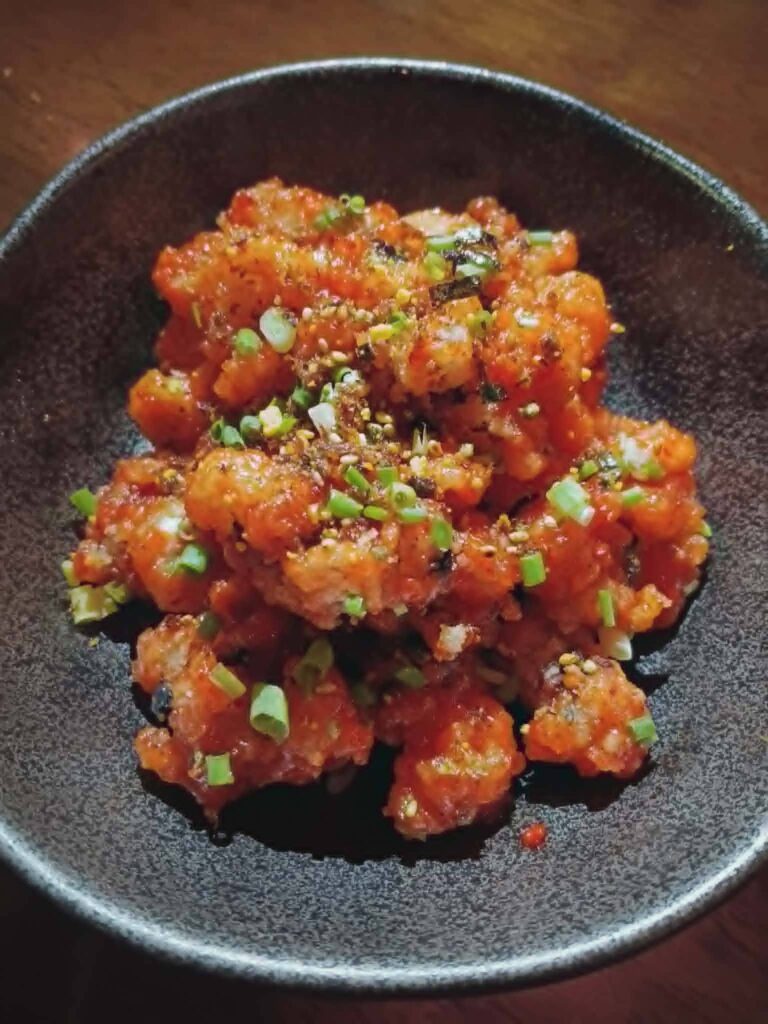
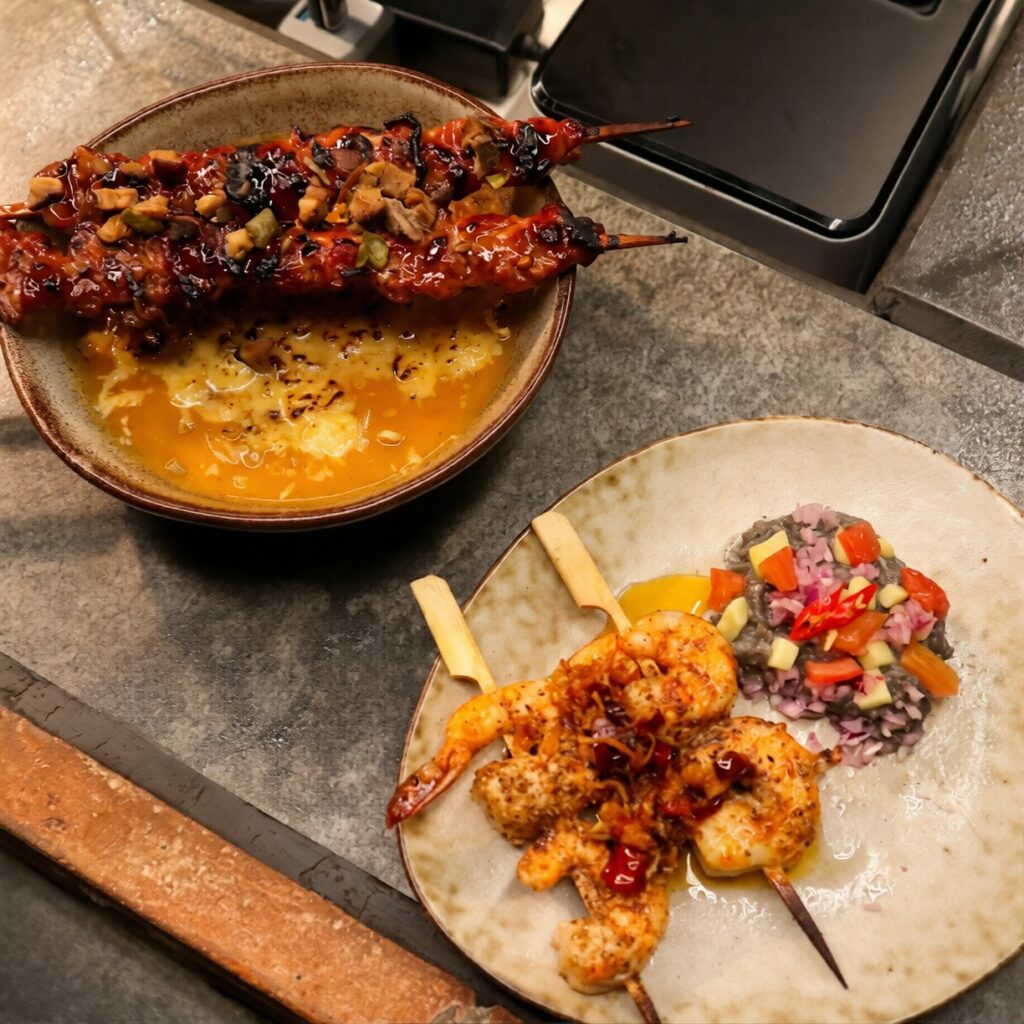
Unexpected pairings, delicious consequences
The recurring theme at Rekdi seems to be unexpected pairings that have absolutely no business working together—and yet somehow do.
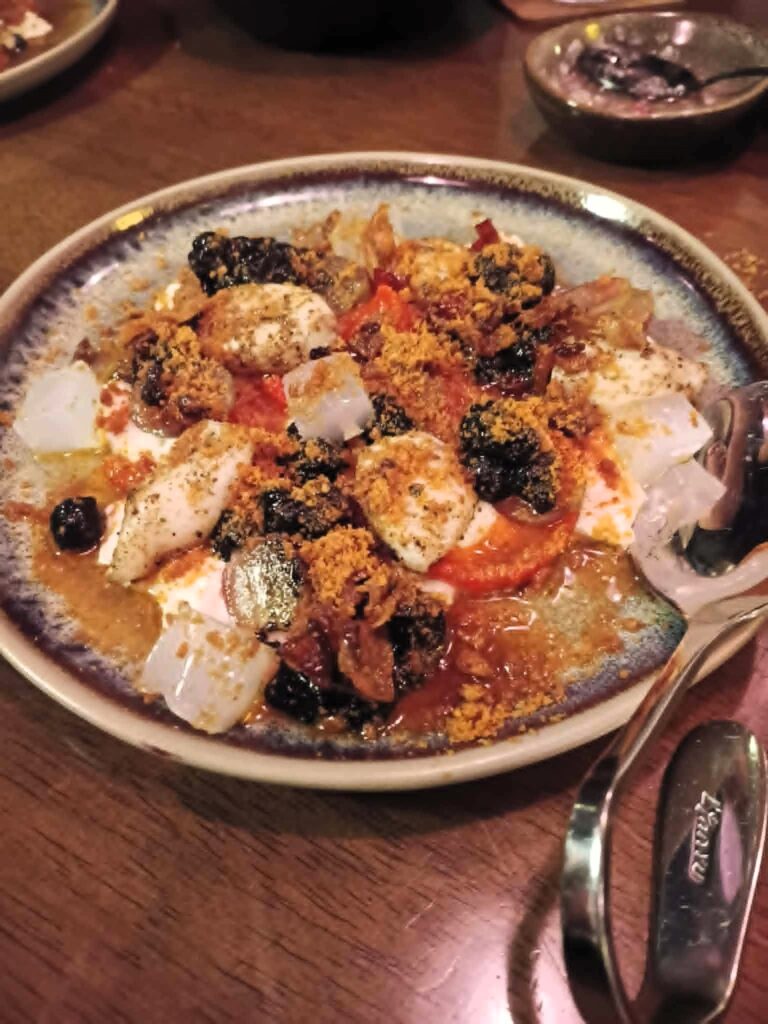
Take the wildest dish on the menu, the Baby Squid, grilled and served with stracciatella, pickled bell pepper, taba ng talangka (crab fat) caviar, and squid ink, grapes, and nata de coco. An absolute riot of flavors and textures that should, by all logic, be pulling in different directions, yet remains remarkably cohesive. Every bite lands differently: briny and creamy one moment, bright and sweet the next, with bursts of crab fat and squid ink weaving everything together.
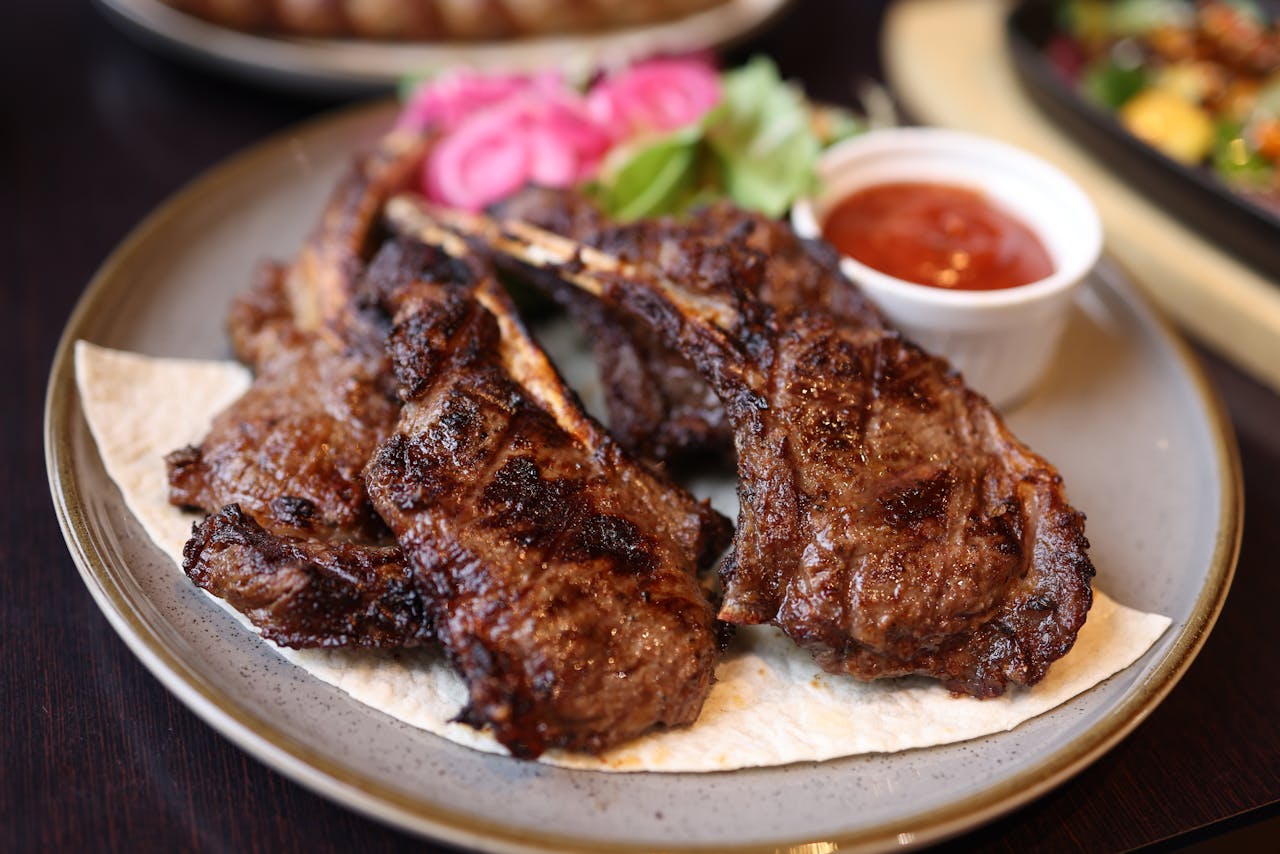
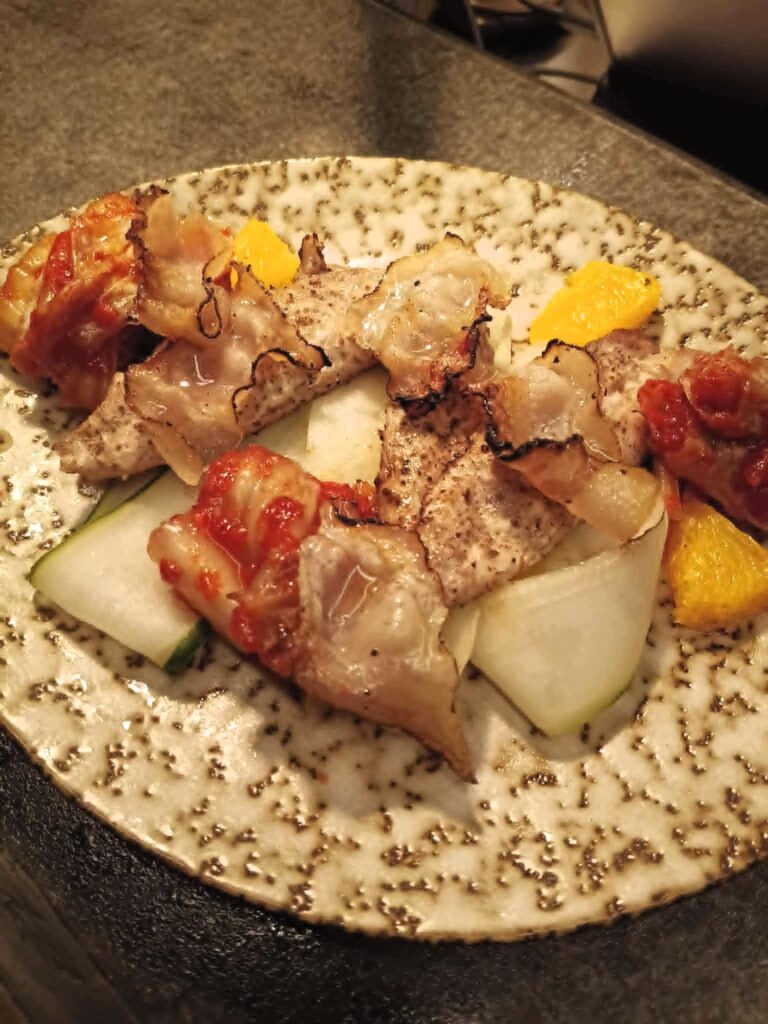
Must-mentions include the Baby Mackerel a medley of citrus, creaminess, and acidity built around a pickled-and-grilled fillet. Served with mascarpone calamansi, pickled cucumber, and orange, every element works to amplify the fish’s delicate flavor rather than compete with it; the Grilled Shrimp with ginger XO sauce and black sesame eggplant salad, where the smoky char and ginger-spiked sauce highlight the shrimp’s firm, juicy bite; and the kiamoy-glazed Squid Poppers with sesame seeds, red-eye gravy, and vinegar dip, with an addictive balance of sweet, savory, and tangy flavors that keeps you reaching for one after another. Of course, the carnivores in the room raved about the Rekdi BBQ. At its core, it’s a straightforward pleasure: hefty skewers of grilled pork and beef belly, deeply charred and unapologetically rich. Then come the Rekdi touches—a crumble of anchovy, mushroom, and capers, alongside kansi onion soup and fontal cheese—that, according to my meat-eating companions, tie everything together beautifully. Like much of the menu, it takes something familiar and nudges it somewhere unexpected. As someone who doesn’t eat meat, I’ll have to take their word for it—but the clean plates that followed were convincing enough.
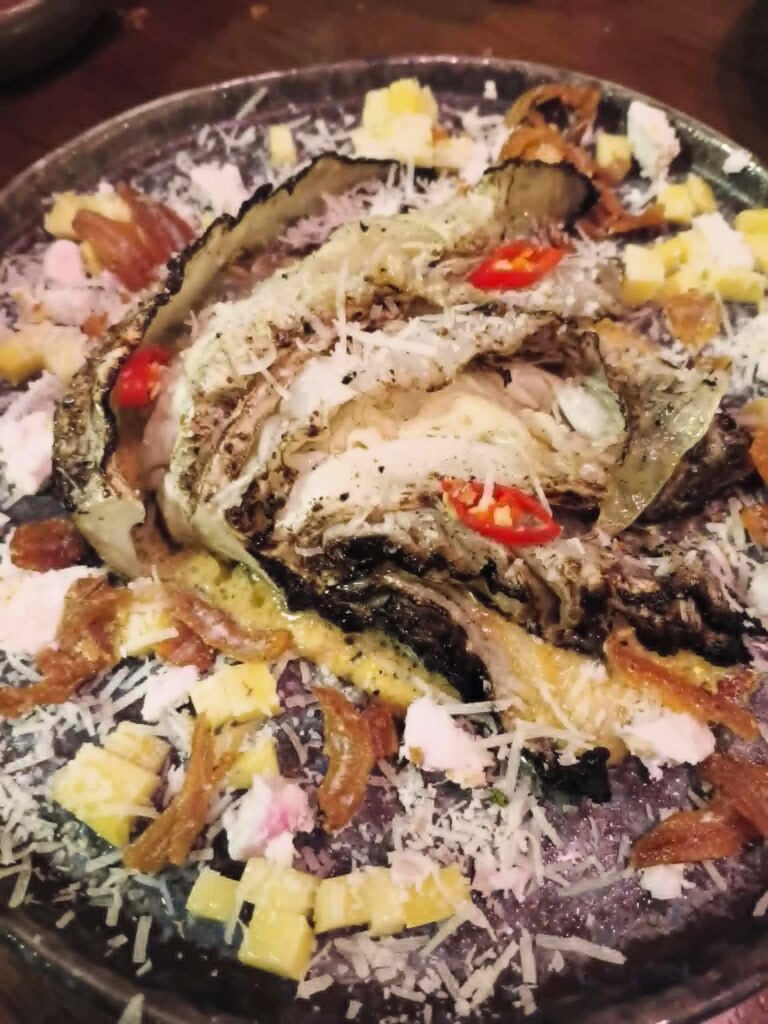
Then there’s the Grilled Cabbage with salted egg-caper hollandaise, green mango slivers, crispy dilis, and parmesan—among Direk Erik’s personal favorites, and once you try it, you’ll understand why. Which feels absurd to write because cabbage is rarely the star of the dinner conversation. Here, however, deeply caramelized edges and a smoky sweetness elevate the humble vegetable well beyond expectations. Charcoal-kissed and layered with contrasting flavors and textures, it emerges as one of the most surprisingly compelling dishes on the table.
That’s Rekdi’s trick. It takes familiar Filipino flavors and nudges them somewhere unexpected without losing their identity in the process. The cooking feels inventive, but never performative. Creative, but not confusing. Comforting, but not predictable.
“We have about 16 items on the menu and everything has a grilled component. The dishes are all reminiscent of my own Ilonggo comfort food. But when I started analyzing Filipino flavors, I realized they’re no longer just OG Filipino flavors. In our household, we have parmesan, we have sriracha, things like that—it’s a mix of so many influences from other countries, right? So when I was thinking about the dishes, I felt they could be a mix of everything, so long as we stay true to the Filipino flavors we’re looking for,” Matti shares of the restaurant’s culinary direction.
Cocktails worth their own story arc
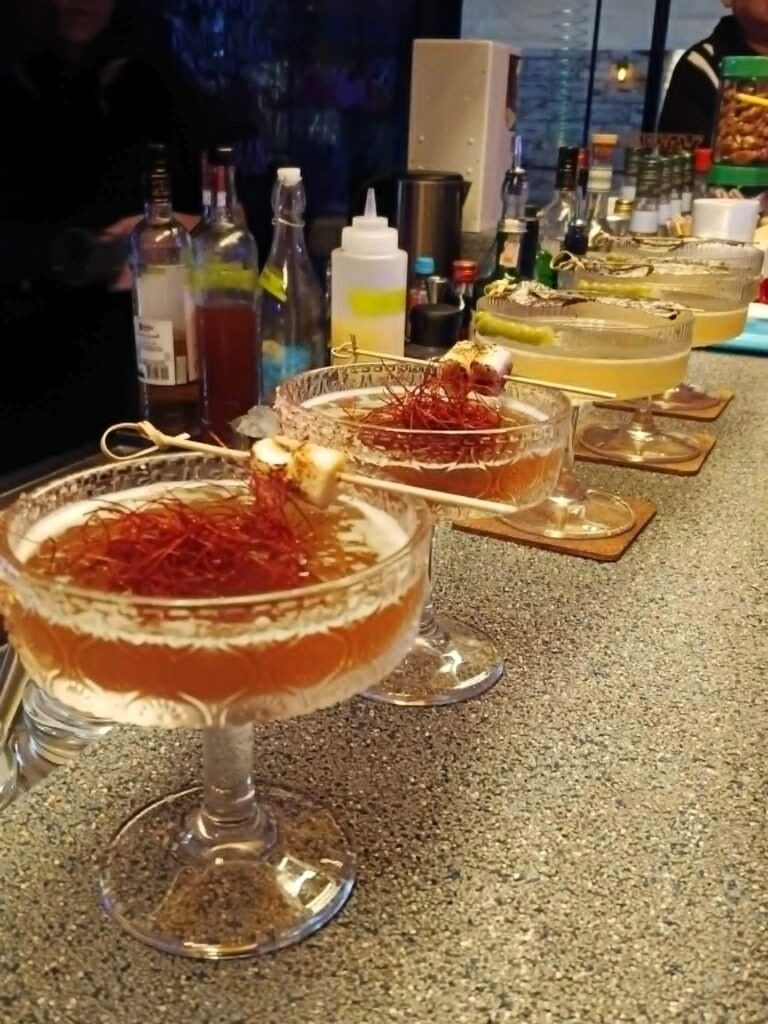
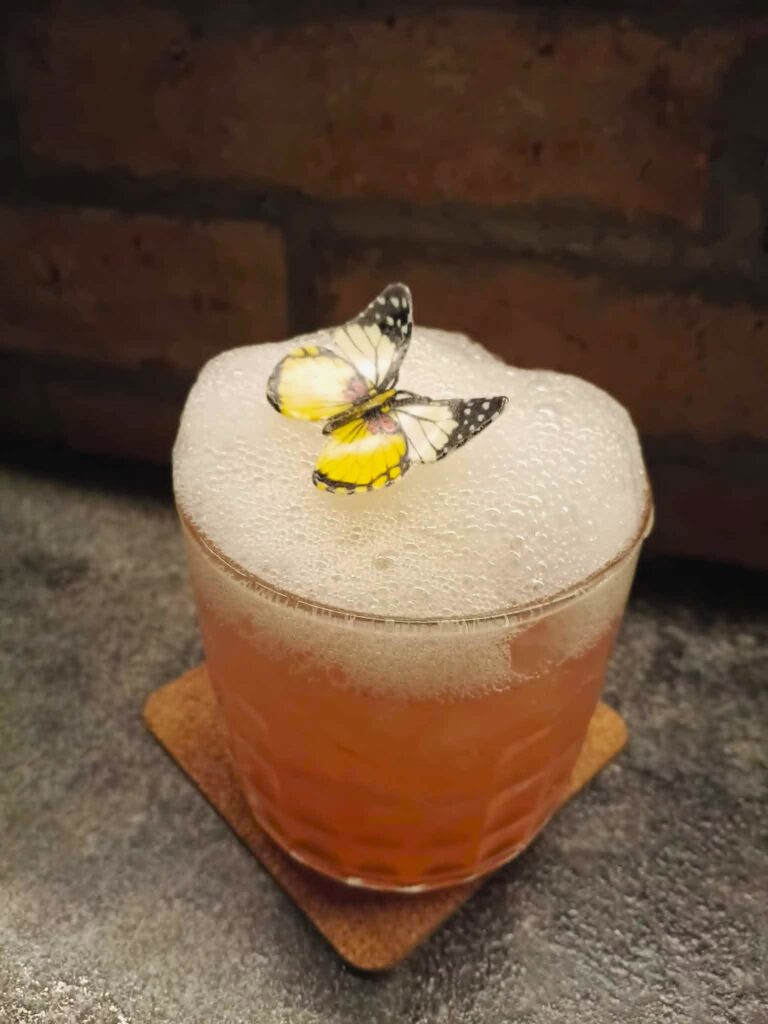
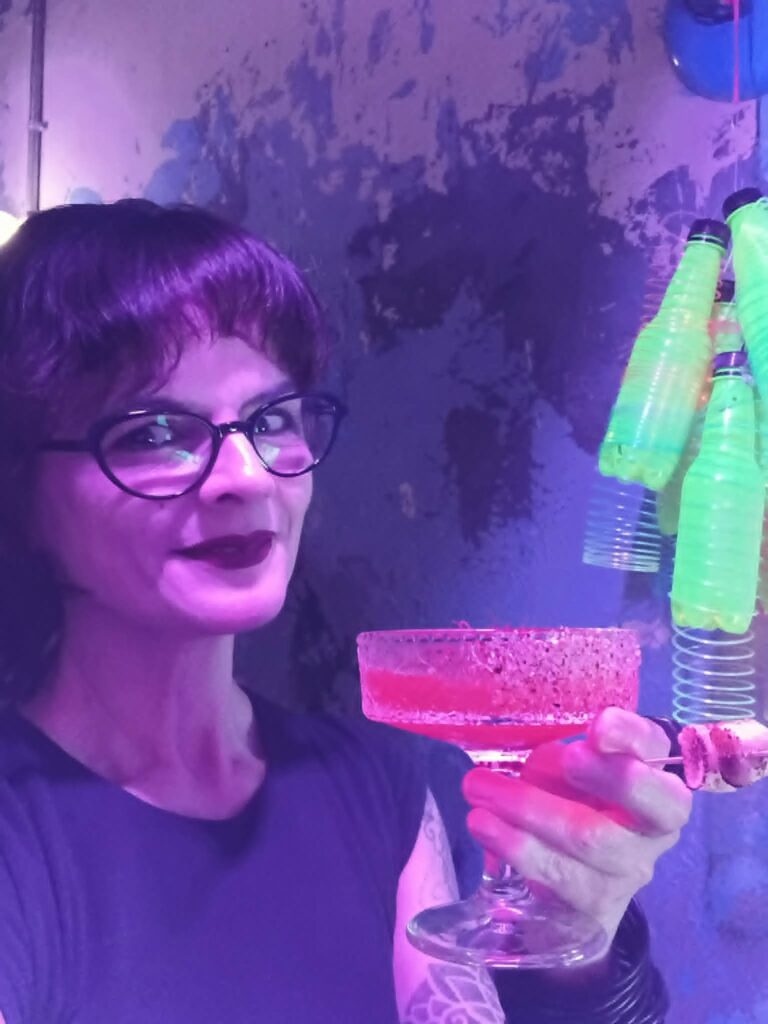
The same unique spirit extends to the drinks. The Tableya mocktail delivered rich cacao notes balanced by brightness and restraint. The Gin Pomelo cocktail offered refreshing citrus complexity, while the White Rum-Yakult combination somehow transformed childhood nostalgia into something decidedly adult.
But the showstopper, for me, was the Ad Castillo cocktail. Let’s give it the pause it deserves. Smoky mezcal-infused labuyo oolong tea, vermouth, splashed with grapefruit juice and passion fruit liqueur create layers of flavor that reveal themselves long after the first sip. It’s the kind of cocktail that makes you immediately start calculating your schedule to figure out when you can justify coming back for another round.

A family affair
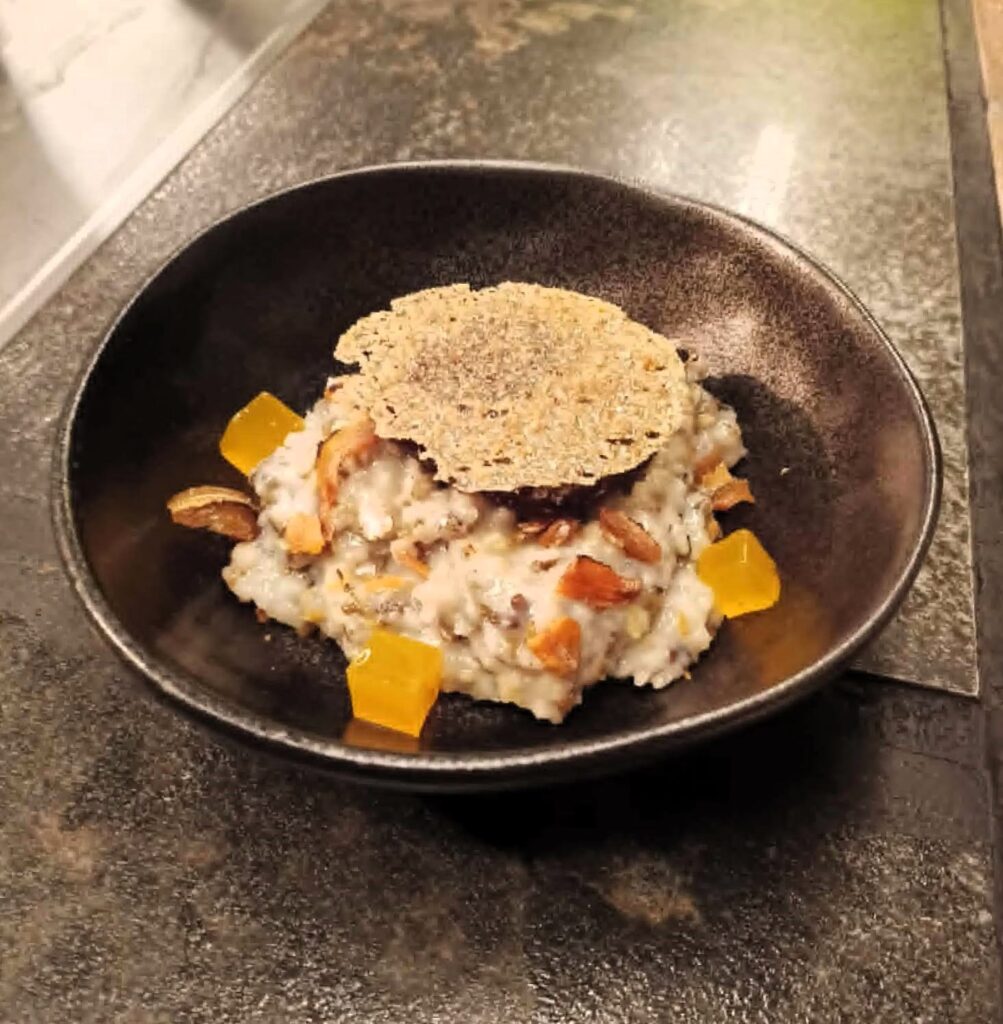
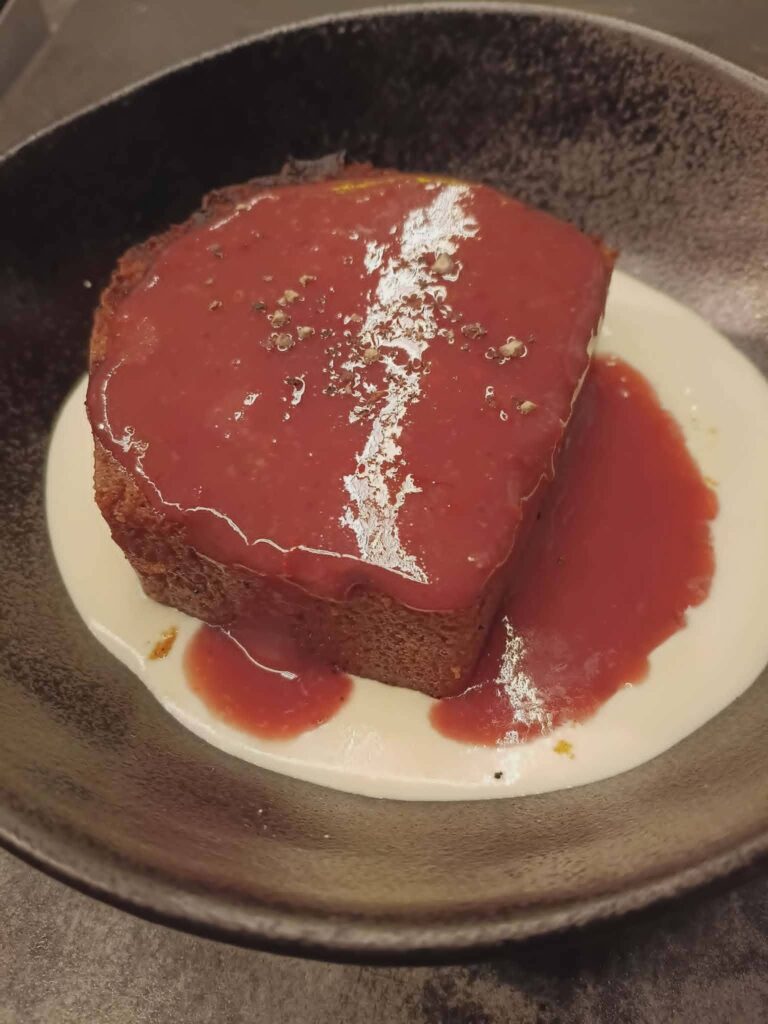
Dessert comes with a personal touch—and the same wildly imaginative combinations. Case in point, the Rekdissert, Tinutong na Munggo Riz au Lait, mung beans in coconut milkserved with chocolate mousse chip and dilis tuile. On paper, it sounds like a dare. In practice, it becomes a conversation starter. Creamy, savory, slightly sweet, with bursts of salt and crunch that keep shifting the flavor experience from one bite to the next. The Brown Butter cake, heated up over coals for a light char and served with kesong puti (white cheese) cream and batwan berry sauce, quickly became the crowd pleaser—tart, nuanced, and uniquely Filipino, it was both comforting and surprising. The Coconut Ice Cream served as the perfect curtain call. Cool, creamy, and elegantly restrained after a meal filled with bold flavors and unexpected turns.
Everything is made by Audrey Matti, Erik’s daughter and the restaurant’s pastry chef, and there is talk of a coffee and pastry shop opening soon, within Rekdi. It’s a fitting ending for a restaurant that consistently balances innovation with familiarity.
Why expats should have rekdi on their radar
Poblacion has become one of Manila’s most dynamic dining and nightlife districts, attracting both locals and international visitors looking for experiences beyond the usual tourist checklist. For expats, Rekdi offers something particularly valuable: a genuine introduction to Filipino food culture without requiring a deep understanding of local culinary traditions.
The restaurant’s communal format feels familiar to anyone accustomed to tapas bars, izakayas, or neighborhood bistros. At the same time, the flavors remain unmistakably Filipino. It’s accessible without being watered down, local without being exclusionary. It’s an easy entry point into contemporary Filipino dining, and proof that familiar flavors can still surprise you.
The plot twist nobody saw coming
The whole evening felt less like a restaurant review and more like being invited into someone’s very quirky, creative home—Pinoy comfort meets pop-culture explosion, layered with deeply inventive energy.
For someone known for crime thrillers, horror films, and stories that expose the darker side of society, Erik Matti has built a place that’s surprisingly playful. Whimsical. Nostalgic. Slightly chaotic. Full of surprises.
Like Gagamboy (the titular superhero from Direk Erik’s popular 2004 Filipino superhero comedy film) grew up, got into cocktails, and opened a modern karinderya in Poblacion.
That plot twist, I didn’t see coming.
Need to Know
Where: 5713 Pagulayan Street, Poblacion, Makati City
When: Tuesday–Sunday, 6 p.m.–midnight for dining; 6 p.m.–1 a.m. for drinks
Budget: Around ₱400–₱500 per person for a lighter meal; ₱1,000+ per person for a fuller feast with drinks and dessert.
#Rekdi
#ErikMatti
#ModernKarinderya
#RekdiPoblacion
#Poblacion
#FilipinoFoodWithATwist
#FoodieAdventure
#ExpatPH
#ExpatPhilippines
#ExpatEats