





What are Filipinos really traveling for this year? Intentional trips, micro-escapes, food adventures, and experiential, shared moments are redefining getaways
I recently attended the Klook Travel Pulse 2026 media lunch at Tartufo Ristorante in Bonifacio Global City and—no surprise—I’ve got thoughts. The good kind. The kind that sticks. I’ve been in the business of travel writing since 2006, after all.
For context: Klook isn’t just another booking app. It’s become a barometer for how we travel now—what we book, why we go, and increasingly, what we expect to feel when we get there. Founded in 2014, Klook is Asia’s leading platform for experiences and travel services, offering tours, attractions, local transport, and stays in over 3,400 destinations globally. Essentially, it’s where convenience meets discovery, helping travelers find unforgettable moments anytime, anywhere.
And if their latest survey results and industry conversations are any indication, travel in 2026 isn’t simply about ticking destination boxes anymore. It’s about signal over noise. Here’s what stood out, for me.
Experiences over destinations: live events, sports, and immersive travel
Let’s start with the obvious: live events and music tourism are having a moment. As is sports tourism. Not a blip—a full-on movement. People are planning trips around concerts, festivals, cultural happenings, sports events. The destination per se is almost secondary. The experience is the headline.
But here’s where it gets even more interesting—and more grounded than aspirational Instagram would have you believe: We’ve officially entered the era of “What can I/we do there?” > “Is there a piso fare?” That shift says everything.
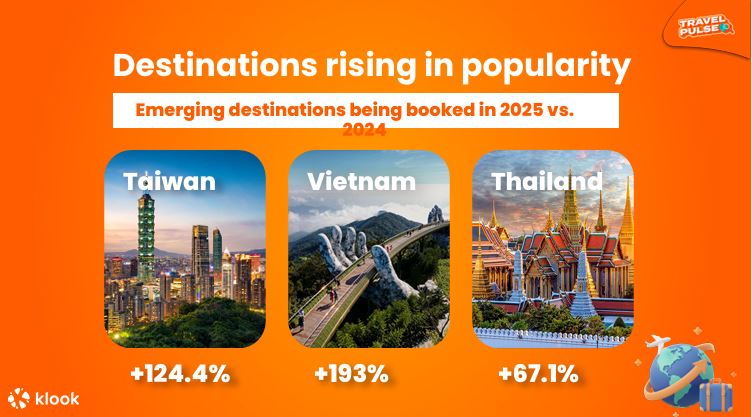
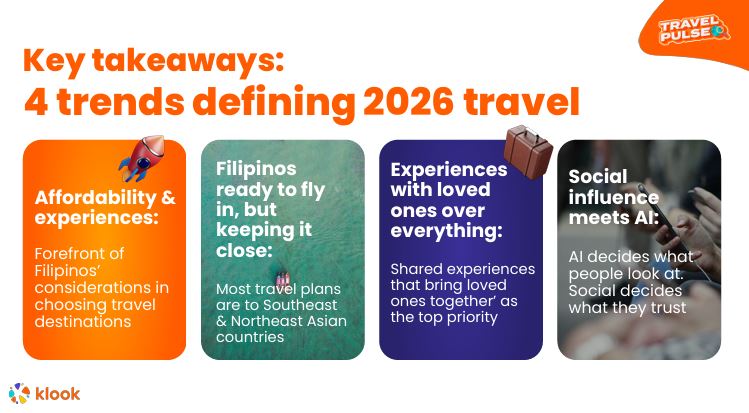
Budget is still a top priority—42% of Filipinos cite it as a primary factor—but travelers are also getting more intentional. Klook’s data, drawn from 11,000 respondents across APAC (including 500 Filipinos, mostly Gen Z and Millennials), shows that while travel intent hasn’t dropped, behavior has evolved. People are staying closer to home: think short- to medium-haul trips to Taiwan, Vietnam, Thailand. Exciting, yes—but practical, too. Less fantasy, more feasible.
Spending smarter, not just cheaper
Here’s another significant shift: it’s not just about saving money. It’s about spending better. It’s not solely about the cheapest trip anymore, it’s about making it worth it.
Filipinos are prioritizing:
- Meaningful experiences
- Food (always food)
- Shared moments with people who matter
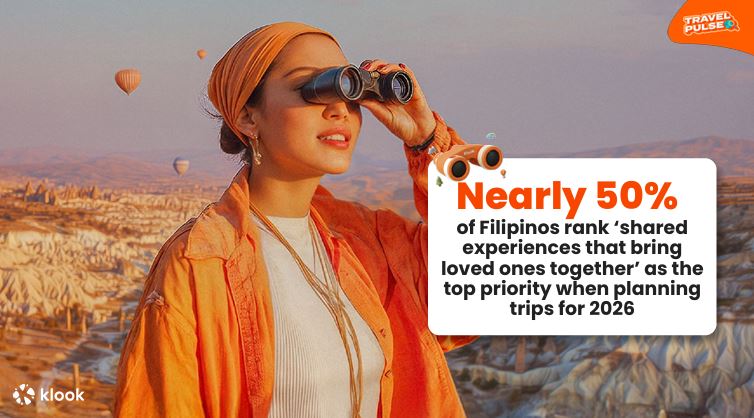
Nearly half rank “experiences that bring loved ones together” as a top travel priority. That hit. Because it tracks. We’re not just traveling to escape—we’re traveling to reconnect.
And the numbers back it up:
- 39.2% domestic growth for Klook in 2025
- 127% surge in Philippine hotel bookings
- Emerging destinations exploding: Vietnam +193%, Taiwan +124%, Thailand +67%
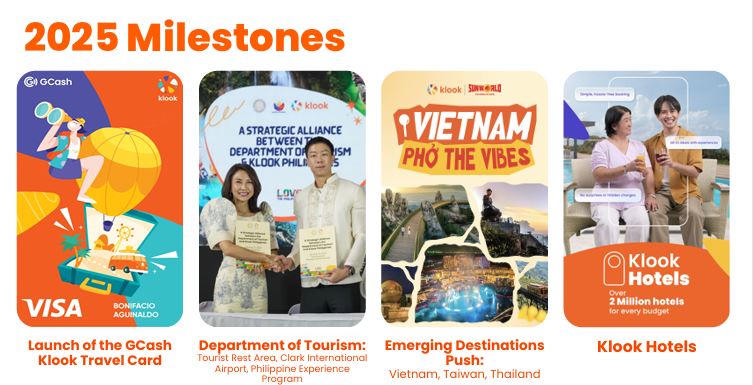
Add milestones like the GCash-Klook travel card and the Department of Tourism partnership, and it’s clear: Klook is playing offense and defense—expanding access while shaping demand.
Trends, tools, and tricks for travel today
Weekend travel is booming—top destinations for 2025 included Metro Manila, Boracay, Cavite, Cebu, and Pampanga—and the trend is expected to carry into 2026. Micro-escapes are the new long-haul flex. Social media remains king for decision-making, with real stories outpacing polished ads. Facebook, Instagram, and YouTube dominate when it comes to travel tips and local insights.
AI is in the mix, but not as the decision-maker—it’s a tool. Millennials are using it end-to-end: research, deals, itineraries. Gen Zs, more targeted: translations, planning. The takeaway? Tech is there to amplify the experience, not replace the human curiosity that drives it.
Filipinos are also chasing cultural hotspots over traditional attractions: local food markets, guided tours, city walks, cultural festivals. The emphasis is on depth, connection, and stories worth retelling.
Practical vs aspirational: the balancing act
What really stayed with me is the quiet tension between practical travel vs. aspirational travel. We still crave dream trips, but we’re choosing what makes sense now—and finding richness there instead. Shopping gets swapped for food. Iconic landmarks for local culture. Long-hauls for layered, meaningful short trips.
This trend is backed by Klook’s insights: Filipino travelers are willing to spend more for experiences that matter—food, local tours, shared moments—while cutting back on material purchases. Planning revolves around family and companions, not just the “grammable” moment.
What it means for travel in 2026
As someone who writes about travel and lifestyle for a living, this matters. Staying relevant isn’t simply about chasing trends—it’s about understanding the why behind them. Klook’s Travel Pulse 2026 shows that Filipino travelers are moving beyond the usual landmark attractions, gravitating toward trips that align with comfort, interest, and meaning.
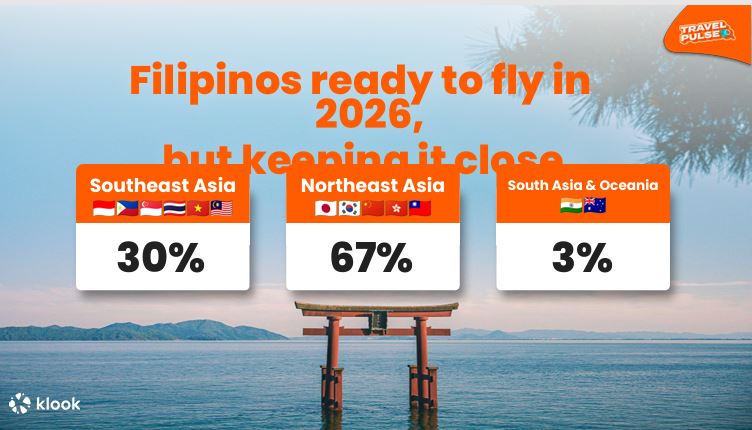
The top destinations remain consistent: Northeast Asia (67%), Southeast Asia (30%), and South Asia & Oceania (3%), with Vietnam and Taiwan emerging as favorites for short- and medium-haul adventures. But the motivations have shifted—Filipinos aren’t just visiting; they’re seeking experiences that resonate.
Travel isn’t shrinking. It’s sharpening. It’s not about quantity; it’s about quality. About the meals you share, the laughter you collect, and the stories that stick. And for me, that makes all the difference.
#KlookPH
#Klook
#KlookTravelPulse2026
#TravelPulse
#TravelTrends
#Travel2026
#ExpatPhilippines
#ExpatPH