





A remastered Bukas Na Lang Kita Mamahalin, a cinematic new collaboration, and a room full of believers offered a timely reminder that true artistry isn’t measured in trends, but in staying power.
Manila doesn’t always announce its best moments. More often, they sneak up on you.
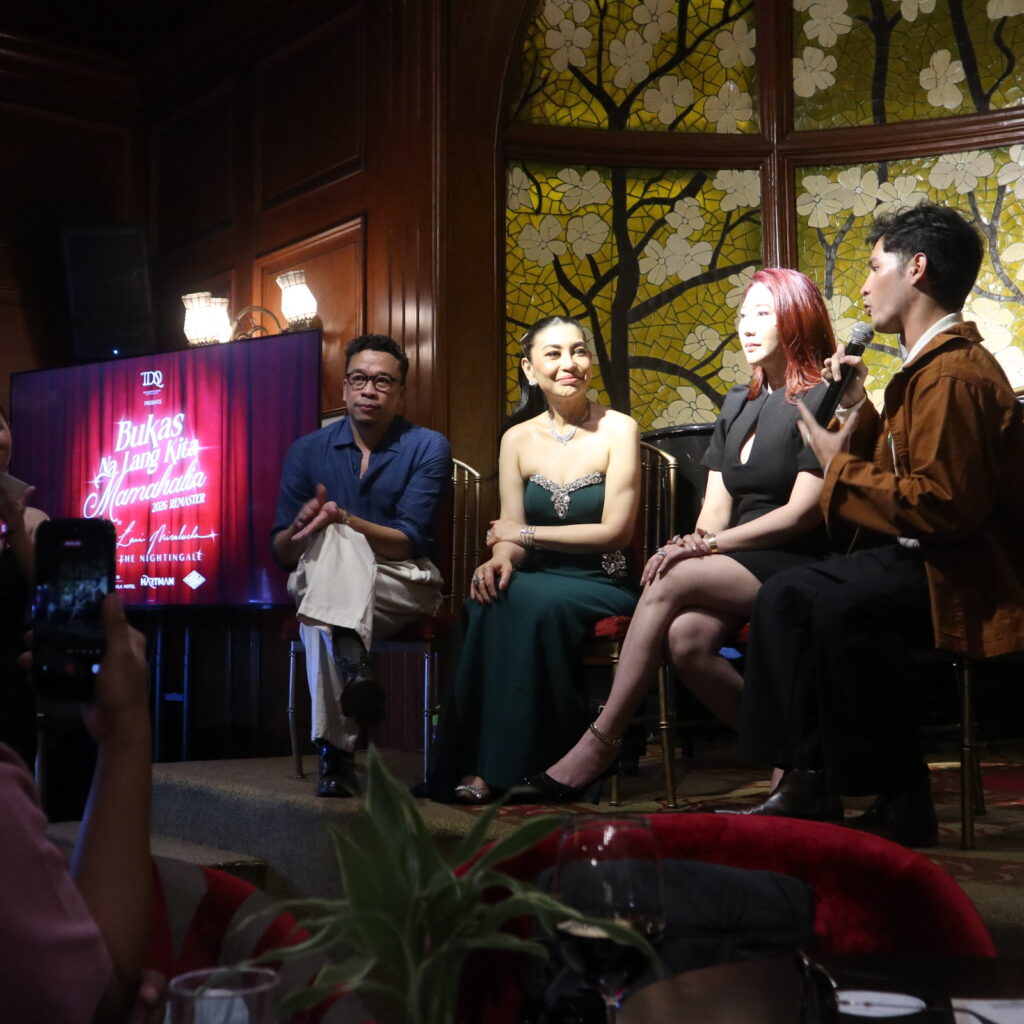
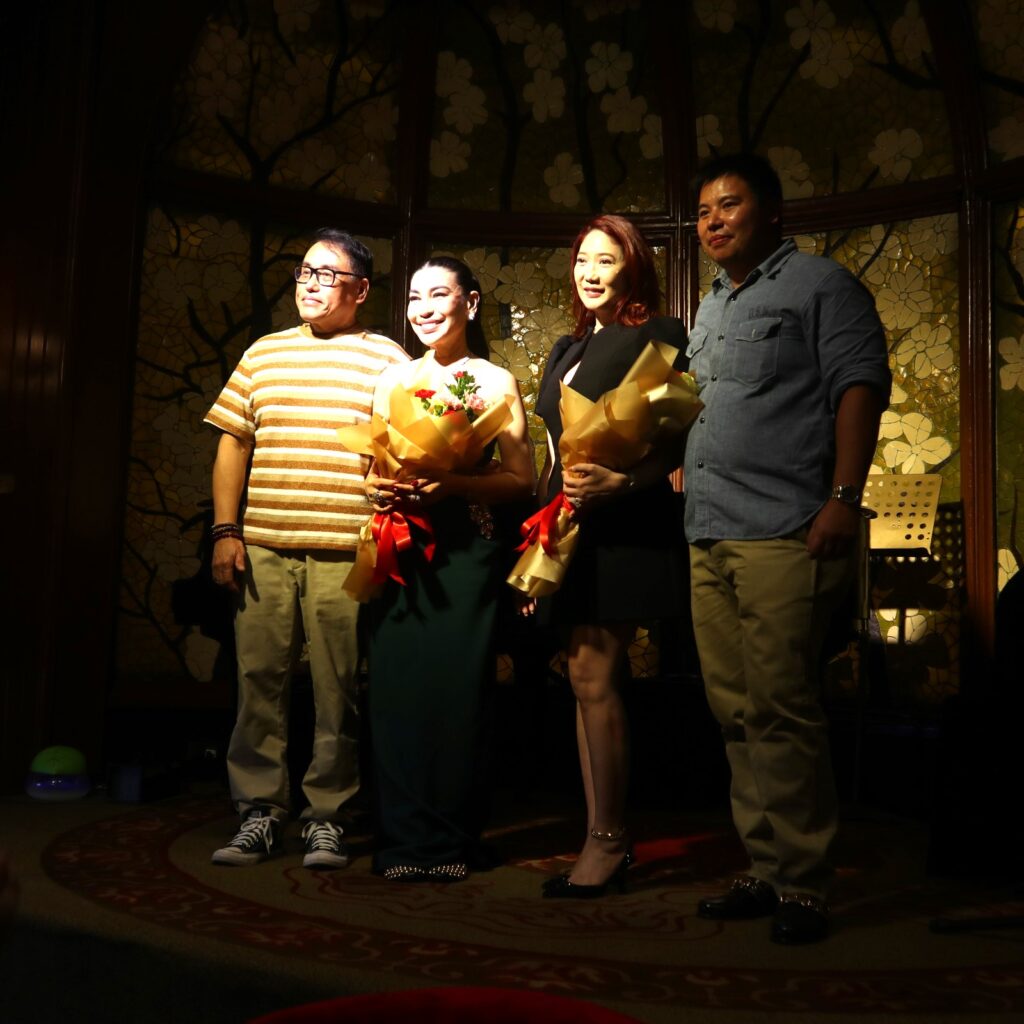
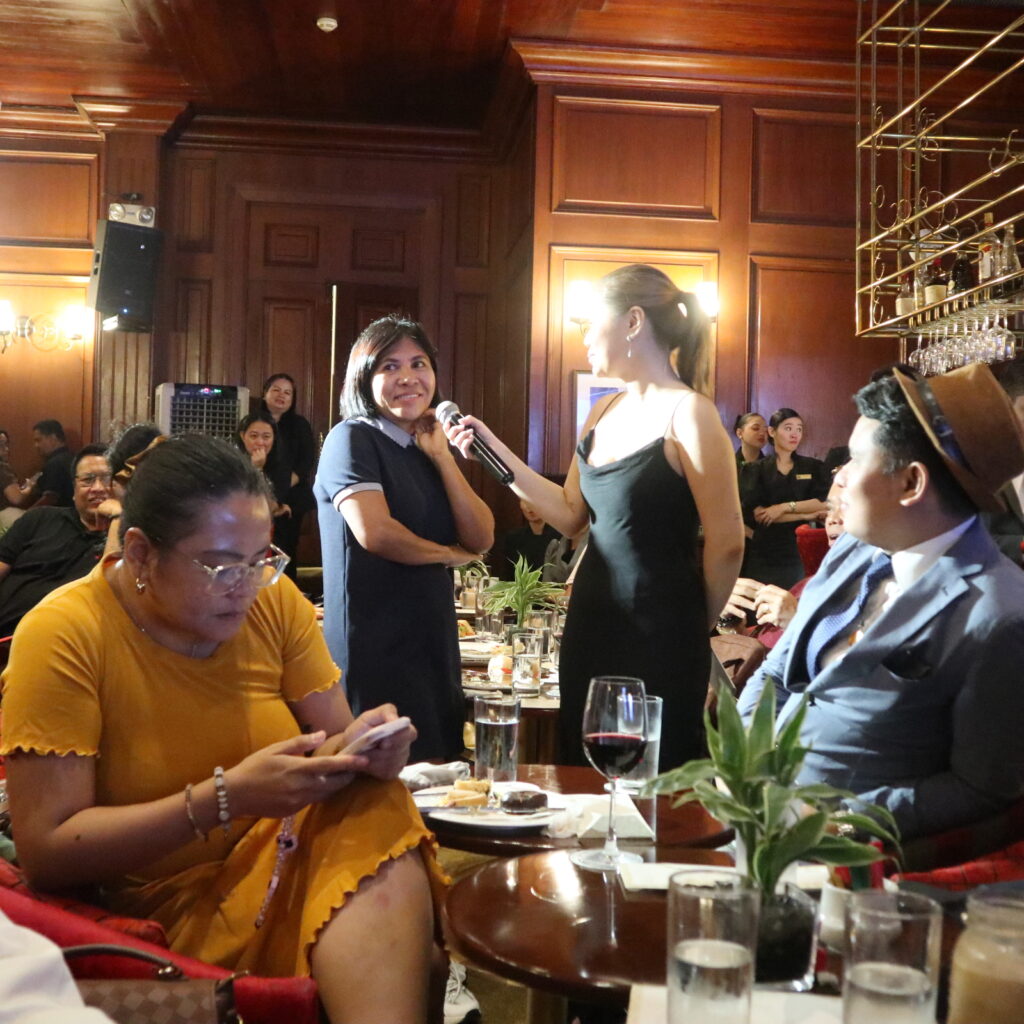
One minute you’re sitting in traffic wondering why you agreed to another weeknight event, and the next you’re settling into the golden-era warmth of The Manila Hotel’s Tap Room, that twilight world of rich wood, aged leather, and timeless jazz that somehow makes the capital city’s hustle feel very far away. The room is unusually attentive, fully present, quietly energized. There was the unmistakable feeling that people weren’t simply attending another launch. They were reconnecting with something familiar.
That’s what the recent launch of the remastered Bukas Na Lang Kita Mamahalin felt like. Not a celebrity appearance. Not nostalgia for nostalgia’s sake. Certainly not a comeback. If anything, it felt like a collective acknowledgment of something many of us already knew: some voices don’t fade with time. They simply find new ways to remind us why they mattered in the first place.
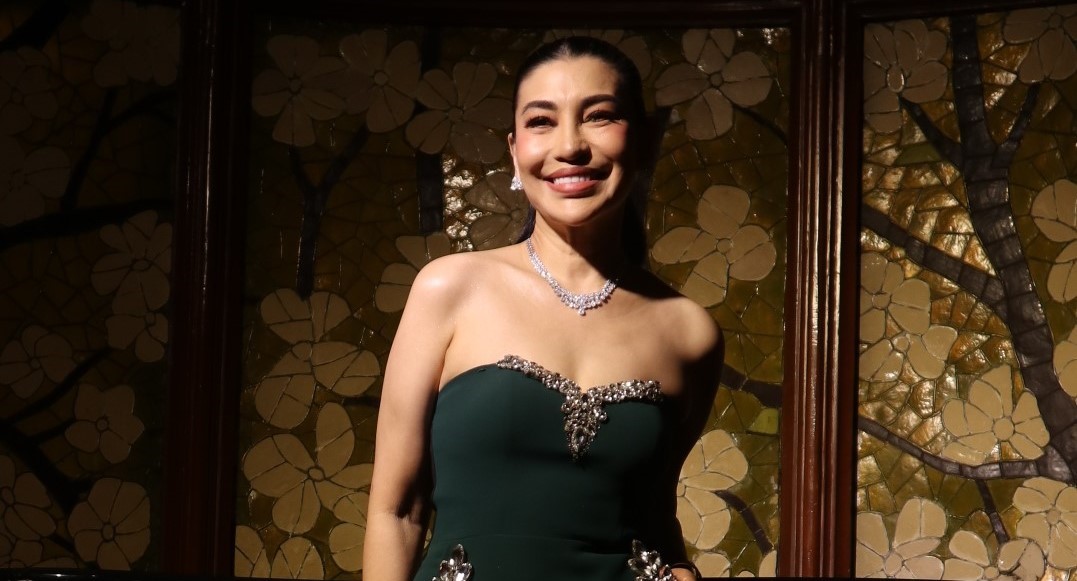
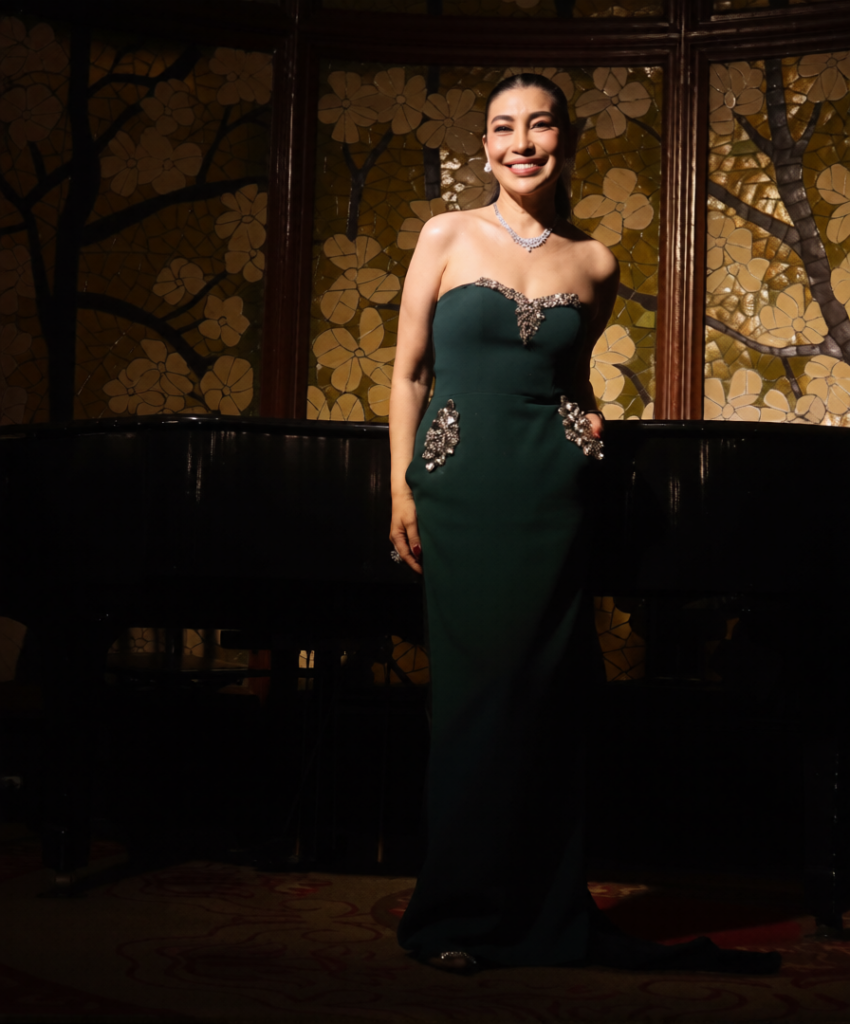
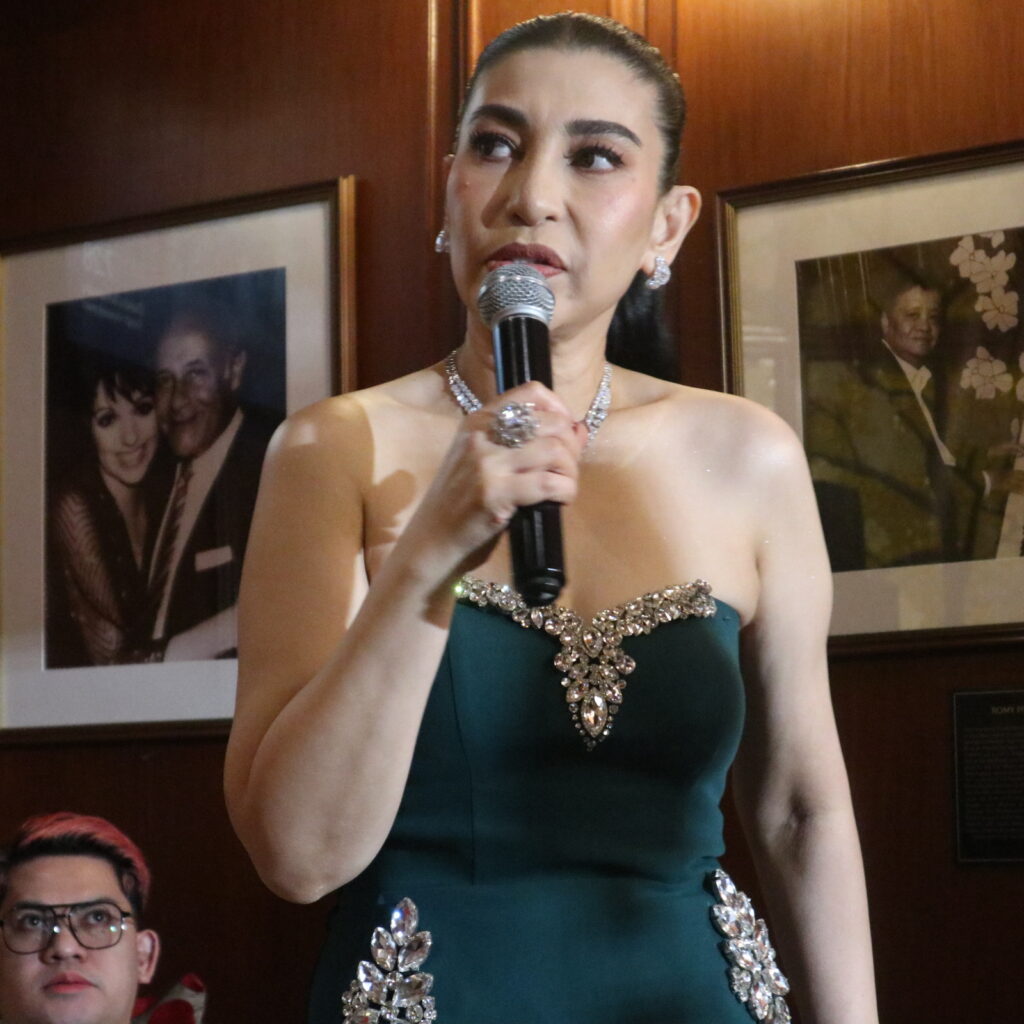
At the center of the evening was Lani Misalucha, now simply The Nightingale, a fitting evolution for an artist whose career long ago transcended geographical boundaries. Despite the international acclaim, her Las Vegas milestones, and decades spent performing on some of the world’s biggest stages, there was something refreshingly grounded about seeing her back in Manila.
As Misalucha reflected, “This song no longer belongs to just one person. Everyone can interpret it in their own way, whether as a heartbreak song or something completely different. I’m just grateful that I had the chance to record it and, in a way, call it my own,” a sentiment that echoed throughout the room.
The songs that become part of people’s lives
The thing about truly iconic songs is that they eventually stop belonging to the artist alone. They become attached to first loves, heartbreaks, karaoke sessions, long drives, and random moments of melancholy on rainy afternoons. They weave themselves so deeply into people’s lives that hearing them years later feels less like listening and more like remembering.
Bukas Na Lang Kita Mamahalin has long occupied that rare territory. Originally composed by Jimmy Borja and first recorded by Jude Michael in 1997, it found its defining voice when Misalucha recorded it in 2000. What followed wasn’t merely commercial success but something much harder to achieve: staying power. More than two decades later, the song still resonates not because it’s been endlessly reinvented, but because its truth remains intact.
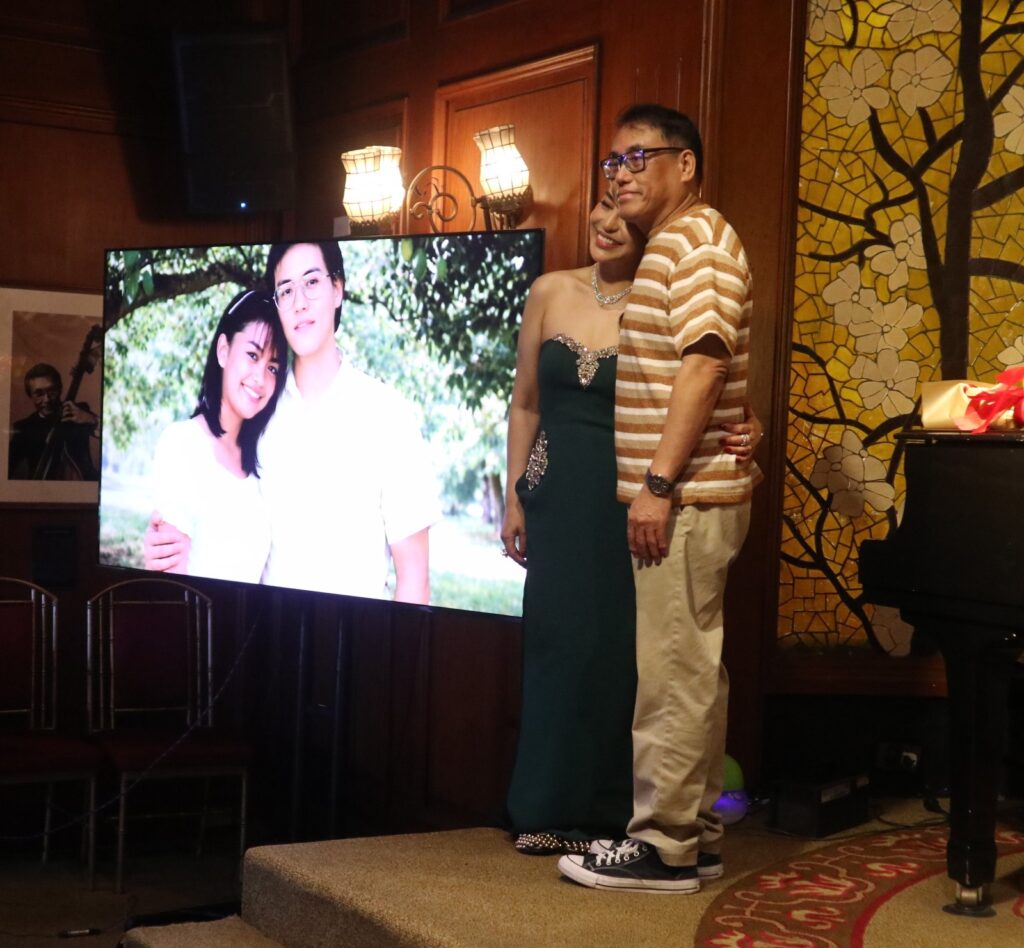
That connection was visible throughout the room. Members of Misalucha’s original fan club were among those in attendance, many of whom have followed her career for decades. As the evening unfolded, stories surfaced of first concerts attended, milestones marked by her music, and the way Bukas Na Lang Kita Mamahalin had quietly accompanied different chapters of their lives.
It was a reminder that the most enduring songs eventually belong to the people who carry them. Looking around the room, it became clear this wasn’t simply a celebration of a remastered recording. For many in attendance, it felt like revisiting the soundtrack to their own lives.
The woman behind the voice
But songs don’t endure on their own. They endure because of the people who give them life, and few have carried one with more grace than Misalucha.
For audiences in the Philippines and beyond, Misalucha’s career has unfolded across several remarkable chapters. There was the powerhouse vocalist who became a household name. The performer who crossed borders with ease. The artist who made history as the first Asian headliner on the Las Vegas Strip. Yet what makes her compelling today isn’t merely the list of accomplishments. It’s the resilience behind them.
In recent years, Misalucha’s battle with bacterial meningitis and subsequent hearing loss became part of her public story. For most singers, hearing loss would be a devastating professional obstacle. For someone whose voice defined an entire career, it could’ve been career-ending. Instead, it became another chapter in a life marked by perseverance.
“I’ll be honest with you, it’s really difficult to sing with just one ear. But I’m grateful that my husband and I are still here, able to appreciate what truly matters. Challenges come in many forms. They’re simply part of life,” Misalucha recounted.
Seeing her on stage now carries a different weight because audiences understand at least part of what it took to get there. Yet there was nothing performative about her presence that evening. No overt references to hardship. No dramatic declarations. Just the quiet confidence of someone who’s weathered more than most and emerged with her artistry—and more importantly, her humanity—intact.
That may have been the night’s most striking quality. Misalucha wasn’t standing there as a survivor seeking admiration. She was simply doing what she’s always done. That resilience sat quietly beneath the surface, informing every note without ever demanding attention.
The vision behind the revival
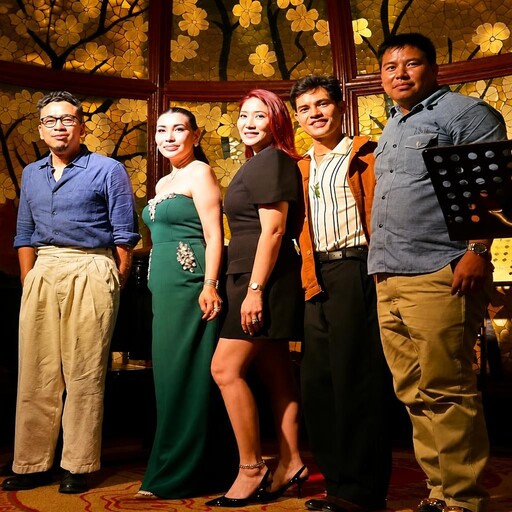
While Misalucha remains the creative anchor of the project, the remaster is also the product of a collaboration that reflects how Filipino storytelling continues to evolve.
At the heart of that effort is Victor Harry Hartman, whose work through Hartman Communications helped shape the project’s broader vision. Rather than approaching Bukas Na Lang Kita Mamahalin as a straightforward remaster, Hartman saw an opportunity to explore something larger: the enduring value of artistry in an age defined by speed and novelty.
Hartman noted: “With an artist like Miss Lani, authenticity is everything. We honored the legacy by protecting the emotional core, while introducing a more intimate and cinematic experience for a new audience. The goal wasn’t to make the song ‘modern’ for the sake of it. It was to remind people that truly great songs remain relevant because the emotions inside them are universal,” a perspective that became the philosophical backbone of the project.
That idea is evident throughout the release. Nothing feels designed to chase relevance or manufacture nostalgia. Instead, every creative decision appears guided by respect for the original work and the understanding that some cultural touchstones retain their power precisely because they remain authentic to themselves.
It’s a perspective that feels particularly fitting coming from Hartman, whose reputation as one of the country’s most respected branding and communications strategists has long been built on uncovering the deeper story beneath the surface. Here, that story isn’t just about a beloved OPM ballad. It’s about legacy. About longevity. About recognizing that relevance and timelessness aren’t always the same thing—but they can be.
In many ways, the project succeeds because it understands that audiences don’t merely remember songs. They remember what those songs meant to them. By centering the conversation on longevity rather than novelty, Hartman transformed what could’ve been a straightforward music release into something closer to a reflection on cultural memory.
The musical arrangement was reimagined by Adonis Tabanda, who expanded the melody with richer orchestration while remaining faithful to the heart of the original. The result is fuller, jazzier, and more cinematic without sacrificing the intimacy listeners have long associated with the song.
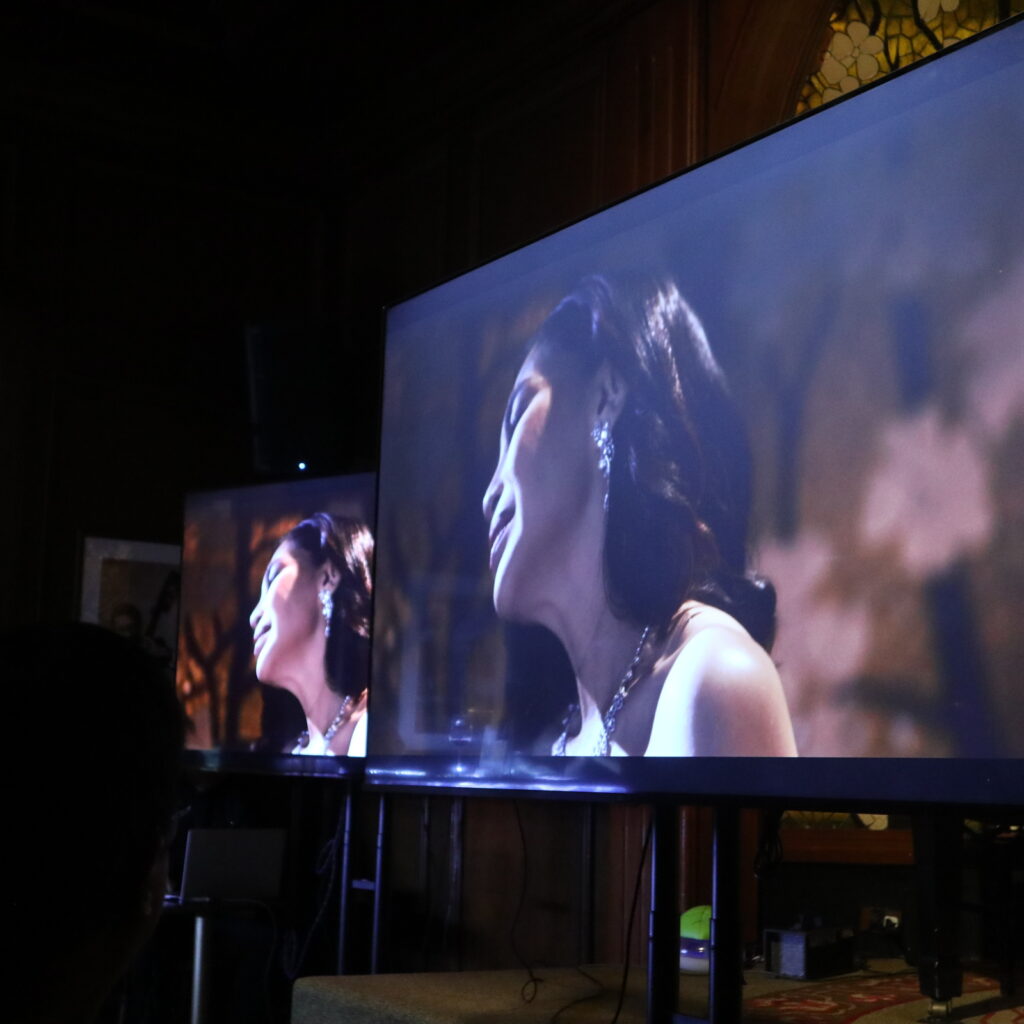
That cinematic quality extends into the music video directed by Jason Magbanua, whose visual storytelling has long been defined by restraint rather than spectacle. As Magbanua explained, “It wasn’t easy to approach a song that’s already solidified—a done thing. This re-recording is much jazzier, and I’m not really a jazz guy, so I had to study the beats and rhythms carefully. I wanted to make sure it wasn’t all intensity throughout, but that some moments felt like a quiet conversation between two people,” an approach that perfectly suits a song whose power has always come from honesty rather than theatrics.
Taken together, the project feels less like a collection of creative disciplines than a shared commitment to preserving a beloved piece of Filipino music history while allowing it to speak to contemporary audiences in a fresh way.
More than jewelry, more than branding
The evening also marked another significant chapter in Misalucha’s story: her role as the new face of The Dainty Queen.
Celebrity partnerships are hardly unusual, but this one felt less transactional than most. The connection makes sense not because of fame, but because of what both sides represent. Strength without excess. Elegance without ostentation. A belief that confidence comes not from appearance alone, but from experience.
For TDQ, jewelry isn’t positioned as mere adornment. Instead, the focus is on self-expression, empowerment, and the stories women (and men) carry with them. “Miss Lani’s very humble, and that’s something I really admire because I come from humble beginnings myself. I’ve been a fan ever since I was young and doing karaoke. So when Harry asked if I’d like to work with Miss Lani, I immediately said yes. I’ve always loved her voice, and having someone I admire represent what I’ve built and attained means so much to me,” Fae Escolar, TDQ’s founder, shared.
Misalucha’s appeal has never come from talent alone. It’s also rooted in authenticity, resilience, and a sense of grace earned over decades in the spotlight. That alignment between brand and ambassador feels genuine, which is perhaps why it works. Not reinvention. Not image-making. Simply an acknowledgment of timeless, tried-and-tested value.
The kind of night Manila does well
For all the conversations about what’s trending, what’s viral, and what’s next, there’s something reassuring about witnessing work that’s already proven its worth. A great song. A singular voice. A creative community willing to preserve both.
For expats living in Manila, evenings like this offer something else entirely: a glimpse into the creative currents running beneath the surface of daily life. The city’s artistic depth isn’t always immediately obvious. It rarely heralds itself with the kind of fanfare visitors might expect. Instead, it reveals itself gradually through music, art, storytelling, and gatherings like this one, where legacy, craftsmanship, and contemporary creativity comfortably share the same space.
It’s one of the reasons Manila can be such a rewarding city to live in. Stay long enough and those layers begin to reveal themselves, extending far beyond what’s listed in guidebooks or travel brochures. You discover a creative landscape that’s simultaneously local and global, rooted in tradition yet constantly evolving. You encounter artists whose influence stretches far beyond the Philippines, even as they remain deeply connected to it.
And perhaps that’s the real lesson from the night. Trends come and go. Algorithms change. Audiences move on to the next thing. But every so often, a song stays—and so does the voice behind it.
#TheNightingale
#LaniMisalucha
Lani Misalucha-full
#BukasNaLangKitaMamahalin
#PinoyHits
#OPM
#HartmanCommunications
#TheDaintyQueen
#JasonMagbanua
#TheManilaHotel
#TimelessHits
#ExpatPH
#ExpatPhilippines